Tanca Nica, Cantina

Tanca Nica, Cantina Gallery
Thank you to importer Louis/Dressner for this estate profile.
In an era of increasingly homogenized, post-terroir, natural-ish wines that taste more of process than place, producers like Nicoletta Pecorelli and Francesco Ferreri feel like a throwback to a core, increasingly lost tenet of what drew us to this world of viticulture and winemaking in the first place. For us, the natural wine movement has always been a philosophy revolving around healthy grapes from a specific place and vintage being transformed into the purest, most honest representation the farmer could achieve. We'd tasted the Tanca Nica wines and were already believers, but a recent visit confirmed Pecorelli and Ferreri's passion and dedication for the wines and island of Pantelleria. Moreover, it showed us just how unprecedented and ambitious the Tanca Nica project actually is.
Before diving into the intricacies of Tanca Nica itself, let us provide some context on Pantelleria and its viticulture. A tiny island and Italian territory 55 miles southwest of Sicily and only 35 miles from Tunisia, it's most famous for its DOC capers and sweet passito wine made from Zibibbo grapes. While long known to be capable of making some of the world's most captivating wines, the weather conditions do not make it easy: because of constant Sirocco winds year round, the vines must be trained in gobelets just a few centimeters off the ground to avoid breakage.
Despite being smack-dab in the Mediterranean, Pantelleria lacks any natural water resources and sees little rain. In such, circular basins concas in Pantescan dialect are dug around each gobelet to retain winter rainfall. A technique called 'pizzicatura', which lasts from bud break to flowering, involves manually breaking off the taller vine shoots to make sure that the vines grow within the concas, which then serve a double purpose of water retention and additional protection from the Sirocco winds. Finally, since vegetal competition is so intense, vines must be planted at low density, with traditional plantations measuring two meters by two meters. This training system, dubbed Alberello Pantesco, dates back thousands of years and is so unique it actually received UNESCO world heritage status a few years ago!
World heritage or not, maintaining these vines requires painstaking manual labor for very little wine. Francesco estimates it takes 800 hours of work per hectare, with yields averaging out to 20hl/h in a normal vintage. This is somewhat offset with the fact that Zibibbo is one of the only varieties capable of bringing second-growth grapes to full maturity, but not by much (second-growth yields average 2. 5hl/h). Most of the vines are very old, and its not uncommon for their roots to have dug over six meters into the mother rock to find their nutrients. For those willing to put in the time, effort and passion to see it through, the concentration and flavor in the grapes is exceptional. Sadly, it's no surprise that few if any are still up for the challenge. At its height, 5000 hectares of vines were planted on Pantelleria's 32.5 square miles; down to about 150 today, a good amount of those vines remain abandoned.
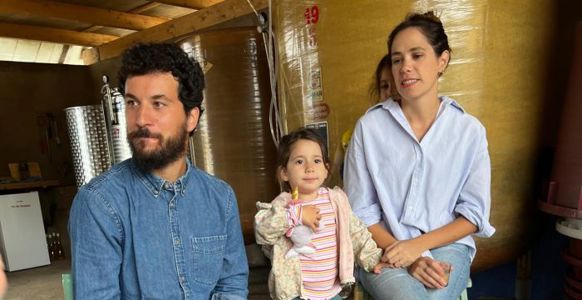
Ok, four paragraphs in and we can finally start talking about Nicoletta Pecorelli and Francesco Ferreri! Francesco is a Pantescan native and Nicoletta is from Sardinia. The two met in Milan by total chance: Nicoletta worked as a sales assistant in Turin and was in Milan that day to fly back to Sardinia for the holidays! Once Francesco had finished his enology studies in Verona, the couple moved to New Zealand to work at a company that produces biodynamic preperations before returning to Pantelleria to start Tanca Nica in 2015. Francesco is from a long line of fisherman, but got the wine-bug in his teens working the family vines with his father and grandfather. While he'd always felt the desire to return to Pantelleria, he is quick to point out it wouldn't be possible without Nicoletta:
"Tanca Nica is OUR project, not mine. Without her this would never gotten off the ground or continue to exist."
Ferreri and Pecorelli work 3.5 hectares spread over 15 parcels within nine contradas. 50 ares are from Francesco's family, the rest is rented from locals who don't want to see the vines go abandoned and an increasing amount of wealthy foreigners whose summer homes came with nearby vines. As they are the only estate actively looking for new parcels, it is actually common for them to be offered plots to rent. The couple has used this to their advantage, trading off and dropping certain areas in search of the very best terroirs. Most are isolated by woods and were abandoned before they took them over.
As Francesco explained during our visit, Pantelleria is a tiny island but has an incredible diversity in soil compositions, micro-climates and elevation levels. As you will discover below, the Tanca Nica project is an unprecendented exploration and celebration of this diversity. Francesco elaborates:
"Every year we seek to capture the grapes’ life in the glass, in all of its phases (with regular tasting) until we put it in bottle. Especially regarding the cru wines, we do not add a gram of sulfur, not because we are dogmatic in this discourse, but because we would like the wine to express all of itself with as much aroma as possible. For this reason, the cru wines feel tight and closed off for a longer period than the other wines, needing at least a year in bottle (a thing we cannot do because we are still not able to keep in our storage to overcome the summer heat but it is our objective for the future.)"
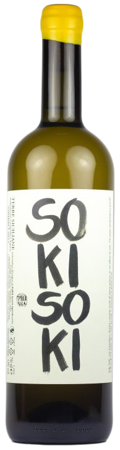
In Pantescan dialect, the term "Tanca Nica" means small, hilly land cultivated and arranged in terraces. Each terraced parcel tanca in Pantescan is vinified individually with various amounts of maceration one day to three weeks depending on the phenolic maturity of the vintage. Most are pre-destined to go into Tanca Nica's largest production, "Soki Soki". This 100% Zibibbo is sourced from 11 tancas within six contradas, each averaging 30 ares. It serves as a snapshot of the island's most common soil composition: volcanic sands of pumice and lapilli known locally as Soki Soki. Meant to be accessible in its youth, the wine pops with bright fruit and aromatics.
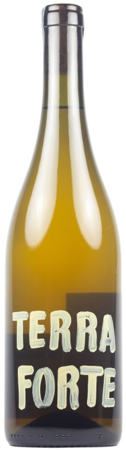
At a whopping 1000 bottles, the second largest production is a cuvée called "Terra Forte". Produced from two tancas of very old vines, here the Zibibbo grows on "terra forte" soils composed of sandy clay from degraded basalt and obsidian. The result is a much more powerful, structured expression of Zibibbo that, while keeping the grapes' trademark aromatic qualities, is more serious and age-worthy.
Next are four cru wines, all single-tanca expressions of Zibibbo:
"Since 2019, we have focused our attention on four plots which, due to their characteristics, we consider the "Grand Crus" of the island. This type of work can only be done if the soil is alive, as the microfauna interacts with the roots of the plants in a symbiotic exchange and are able to read the characteristics of the soil perfectly. To keep the wine as lively and faithful as possible to the territory, we don't add even a gram of sulfur dioxide. The label colors highlight the color of the terrain profile:
Yellow label (from the Cufurà district): a plot made up of yellow pumice. The wine is always delicate in its aromas and structure, more immediate than the other three labels. The scents reflect the maquis: alyssum and wild thyme.
Gray label (from in the Rukia district): a plot made up of gray pumice with a layer of volcanic mother rock just 40 cm deep. Among the crus, it is the one that needs the most time to express itself: at the beginning it is reduced, with a slight mouse, but immediately after the summer it becomes complex and acquires an incredible depth. This is the windiest district of the island and I like to think that this is also felt in the wine.
Red label (from the San Marco district): a plot made up of red sand rich in iron and aluminium. The wine naturally tends to oxidize, so much so that it can seem like a raisin base (that is, a dry raisin wine without sugar). Grapes that ripen near the sea, the wine absorbs all the summer heat.
Black label (from the Khaggiar district): a plot made up of black basalt, a very hard and heavy rock. The wine resembles the red label, but is much more austere."
Pecorelli and Ferreri also produce a micro-cuvée of Catarratto called "Kaffefi". It is named after the contrada where 40 to 80 year old vines grow within a single tanca. It is the only white wine that sees no maceration, though it does go through a long, 24 hour press to give it extra structure.
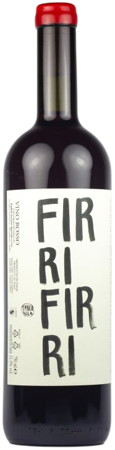
Next in the lineup is "Firri Firri", a clairet-style blend of 85% Catarratto, 10% Pignatello and 5% Inzolia. It's principally sourced from two parcels, though random vines of Pignoletto are co-planted in many of the tancas and end up in the final wine. These varieties have historically always been planted along the walls of the terraces.
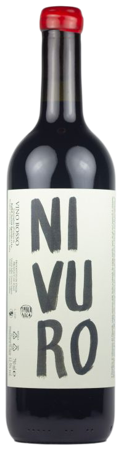
Only one "real" red wine is made, and in tiny quantities. It's called "Nivuro Nostrale", and is made by vinifying 97 plants (count em!) of 100+ year old Pignatello and Alicante. These grapes come from "the most intimate and least known part of our island."
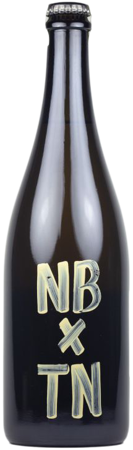
Two petillants naturels are produced if the vintage permits. "Ghirbi Bianco" is 100% second-growth Zibbibo grapes and "Ghirbi Rosato" is from seven autochthonous varieties that grow under the walls of the terraces: Catarratto, Alicante, Pignatello, Inzolia Imperiale and Inzolia Minuta, Grillo and Carignan.
"Vinifying them as an ancestral method is a way to enhance these grapes which are often not harvested. The sparkling wines are not produced every year."
Finally, this is Pantelleria so there has to be a passito! Dubbed "Passulata", Francesco describes it as: "the wine that best represents Pantelleria. Making this wine is an immeasurable act of love towards our island which, like Nature, knows how to be very generous, but also hard, tiring, unpredictable and ever-changing, different with each season."
Over the years, we have had the honor of working with some of the most innovative and trailblazing producers in Europe. In our estimation, what binds them has always been a passion for expressing a sense of place, with organics, hand-harvesting, native yeasts and minimal intervention serving as tools, a means to an end. As the promotion of natural wine continues devolving into big business, marketing gimmicks and pigeon-holing a one-funk-fits-all visual/flavor profile, it's both reassuring and a breath of fresh air to meet a couple as dedicated, humble, passionate and visionary as Nicoletta and Francesco.
"We don't do this for fame or recognition: we do it for the island. None of the rules I learned in school applied to Pantelleria. I didn't like Zibibbo at first because it didn't conform to what I'd been taught. I had to learn everything with the help of my father and hands-on experience. This liberated me and forged a path that made me love the grape and its place on Pantelleria. We know our wines are expensive, but we promise this is not speculation and nothing else but the estimated value of our work."
Background
- Name of Estate: Tanca Nica
- Region: Sicily
- Country: Italy
- Proprietor: Nicoletta Pecorelli and Francesco Ferreri
- Size: 3.5 Hectares
- Farming: Organic (not Certified)
- Soils: Volcanic
- Grapes grown: Zibibbo, Catarratto, Pignatello, Inzolia
- Fun facts: We hope you like reading really long, in depth producer profiles!